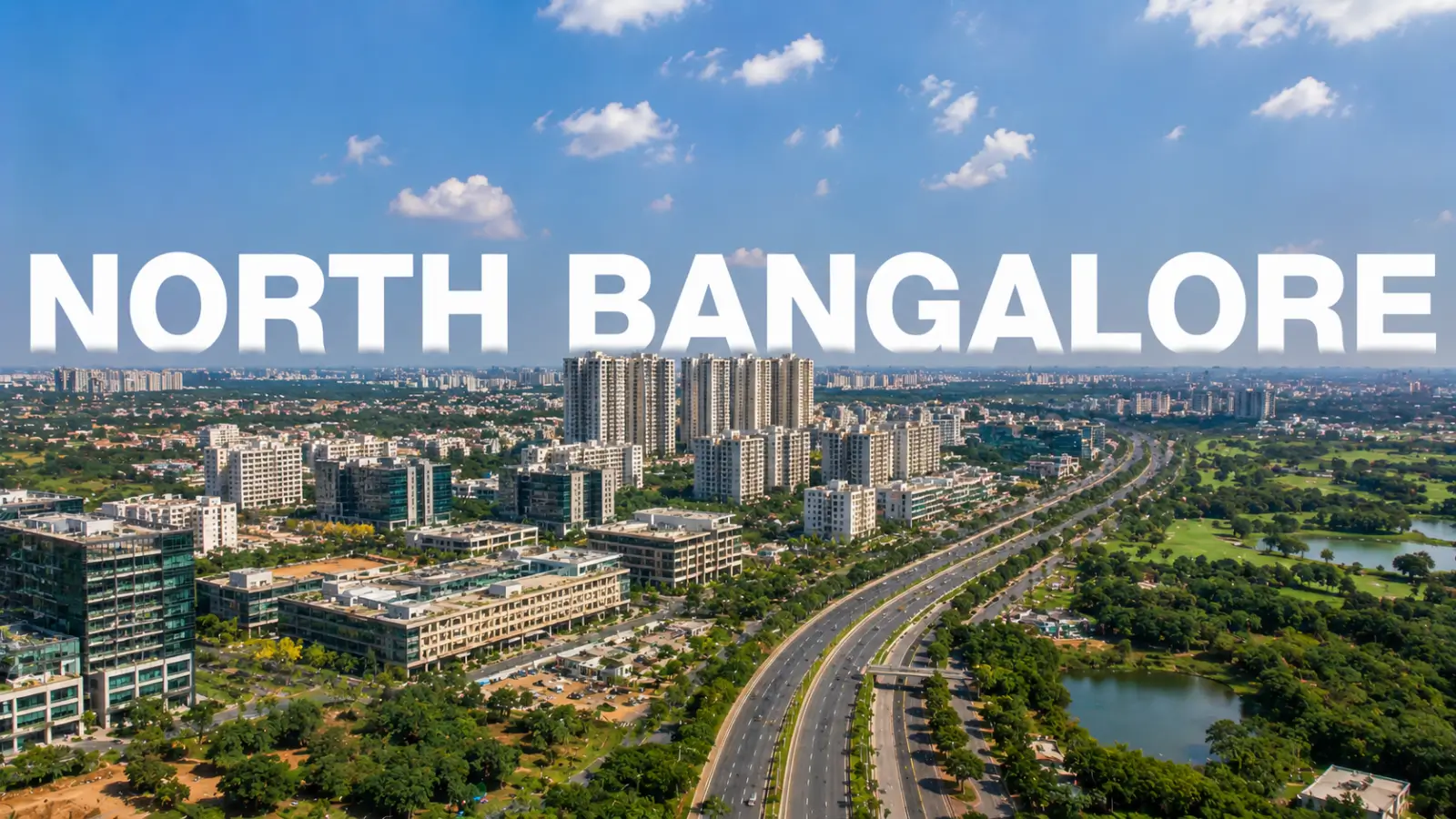
The airport, new employers and transport links have pushed North Bangalore ahead. Here are the reasons, and what they mean for buyers.
A decade ago, many buyers saw North Bangalore as the route to the airport. Today it is one of the city's most active property markets. Why is North Bangalore growing so fast? The answer lies in a combination of the airport, a broadening jobs base, major transport projects and land that still costs less than in established areas. Here is how those forces fit together.
The Reasons at a Glance
Driver | Example |
|---|---|
Airport | Kempegowda International Airport, Terminal 2 and expansion |
Jobs | KIADB Aerospace Park, Devanahalli Business Park, Philips Innovation Campus |
Metro | Blue Line (Phase 2B) under construction |
Roads | NH-44, STRR and the proposed PRR |
Land | Devanahalli land relatively affordable vs Hebbal and Yelahanka |
The Airport Effect
Kempegowda International Airport is the anchor. Terminal 2 and ongoing expansion bring aviation, hospitality and logistics jobs to the corridor. Airport-zone business hotels sit about 8–11 km from Embassy Springs, and the township itself is about 10 km from the terminal.
North Bangalore Infrastructure Projects
Several North Bangalore infrastructure projects are reshaping access. The Namma Metro Blue Line (Phase 2B) is under construction along the airport corridor, with a station planned at Bettahalasur. Alongside it, the Satellite Town Ring Road and the proposed Peripheral Ring Road will link Devanahalli to Hoskote, Doddaballapur and East Bangalore. NH-44 already offers a signal-free drive into the city. Our guide to STRR and PRR covers the ring roads.
A Broader Jobs Base
Employment in the north now goes well beyond IT. KIADB Aerospace Park hosts aerospace and defence manufacturers, Philips Innovation Campus adds research roles, and the Foxconn campus under development at ITIR is a large electronics manufacturing investment. Further towards the city, Manyata Embassy Business Park ranks among Asia's largest tech parks.
North Bangalore vs East Bangalore Growth
Comparing North Bangalore vs East Bangalore growth helps explain the shift. East Bangalore grew early around large IT corridors and is now more built up. The north offers more land near a major airport, newer infrastructure and a growing mix of employers. Buyers who once looked only east now often consider the north first, especially for plots. Both areas still have strengths, so the right choice depends on where you work and how you live.
Land and Price
Land in Devanahalli remains relatively affordable compared with Hebbal and Yelahanka. Branded gated plots trade at about Rs 15,500–16,000 per sft (BSP), and resale plots inside Embassy Springs at about Rs 14,500–15,000 per sft (BSP). Land values in the area are projected to rise roughly 10–14% a year over the next 5–7 years in a base case. Our North Bangalore real estate outlook explores the numbers.
A Corridor with Room to Grow
Unlike older parts of the city, the north still has land available for planned development. That lets large townships, business parks and transport projects take shape together, rather than squeezing into crowded areas. For buyers, it means growth can continue without the congestion seen in some established neighbourhoods, at least for now.
Townships Shaping the North
Large townships have helped the north grow by bringing services with them. Embassy Springs, a ~288-acre township in Devanahalli, includes a school, a healthcare facility, a large clubhouse, a 5.5-acre lake, 32+ themed parks and a commercial Town Centre. The new release adds about 90 villa plots on roughly 8 acres.
What Could Slow Growth
Delays in metro and road projects
Slower hiring at major employers
Changes in interest rates or the wider economy
Weighing these risks helps buyers plan for a range of outcomes rather than assuming growth will continue at the same pace.
What It Means for Buyers
Buyers who choose well-located land with infrastructure already in place stand to benefit most from the north's growth. Check title, RERA status and the full cost sheet, and plan to hold for several years. A site visit helps you see the area's growth for yourself.
So, why is North Bangalore growing so fast? Because several strong drivers point the same way. See the location page, talk to our team, or visit the Embassy Springs Plots homepage.
FAQs
Why is North Bangalore growing so fast?
The airport, a broadening jobs base, major transport projects and relatively affordable land.How does North Bangalore compare with East Bangalore?
East Bangalore grew early and is more built up; the north offers more land near the airport and newer infrastructure.Which infrastructure projects matter most?
The Blue Line metro, the STRR, the proposed PRR and NH-44.What could slow growth?
Project delays, slower hiring or changes in interest rates and the wider economy.
Related Articles
Karnataka Property Rules in 2026: E-Khata, Registration and Guidance Value
E-Khata, guidance values and registration: what plot buyers in Karnataka should check in 2026, and how it applies at Embassy Springs.
How GCCs and Startups Shape Bangalore Property Demand
Global capability centres and startups bring skilled jobs to Bangalore. Here is how that hiring flows through to homes and land.
KIA Terminal 2 and Airport Expansion: Effect on Nearby Property
As Kempegowda International Airport grows, so does the area around it. Here is how airport expansion shapes nearby property.
What's Driving Bangalore Real Estate Growth in 2026
Jobs, infrastructure and a shift north are shaping Bangalore property in 2026. Here are the drivers that matter for plot buyers.